
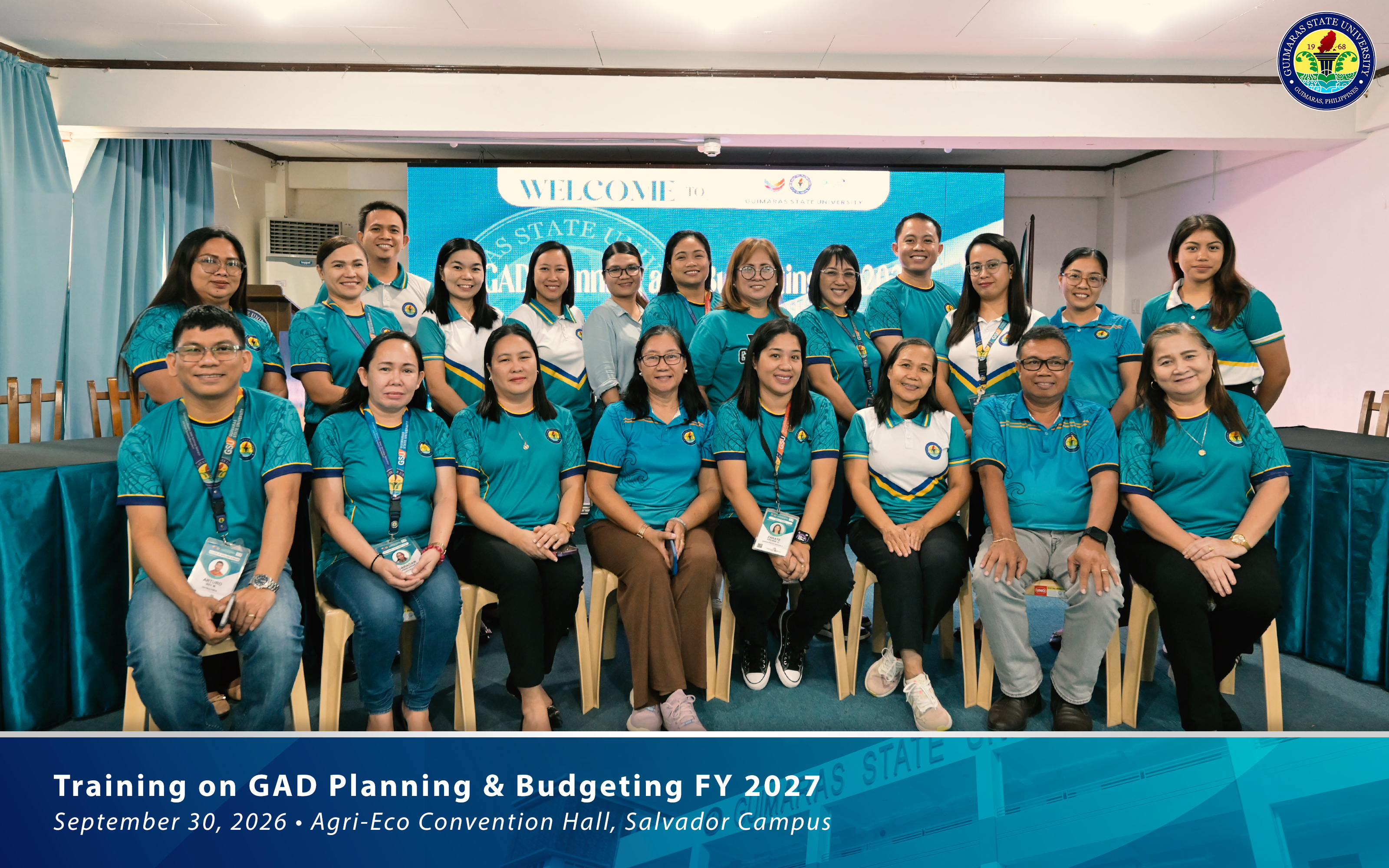
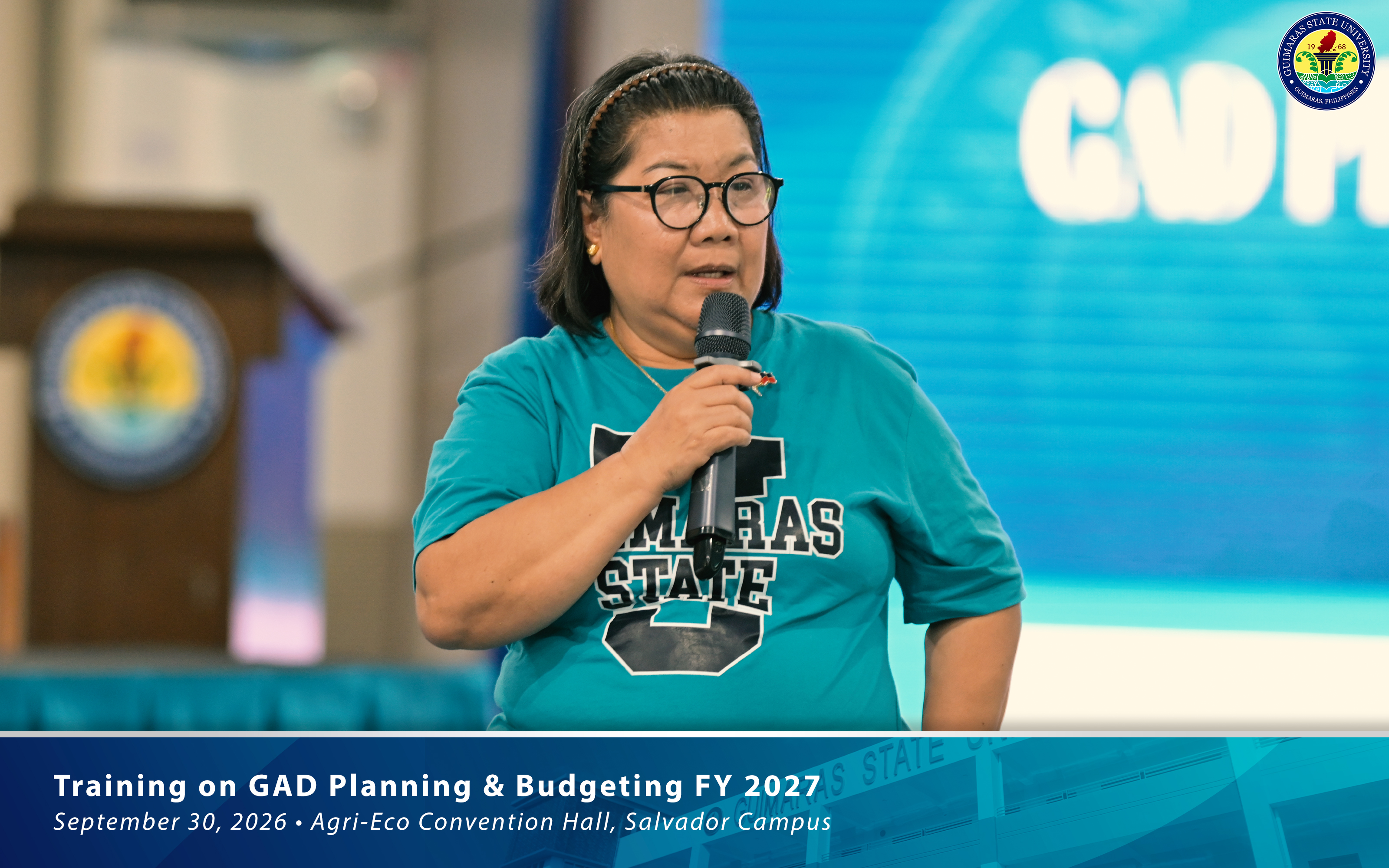
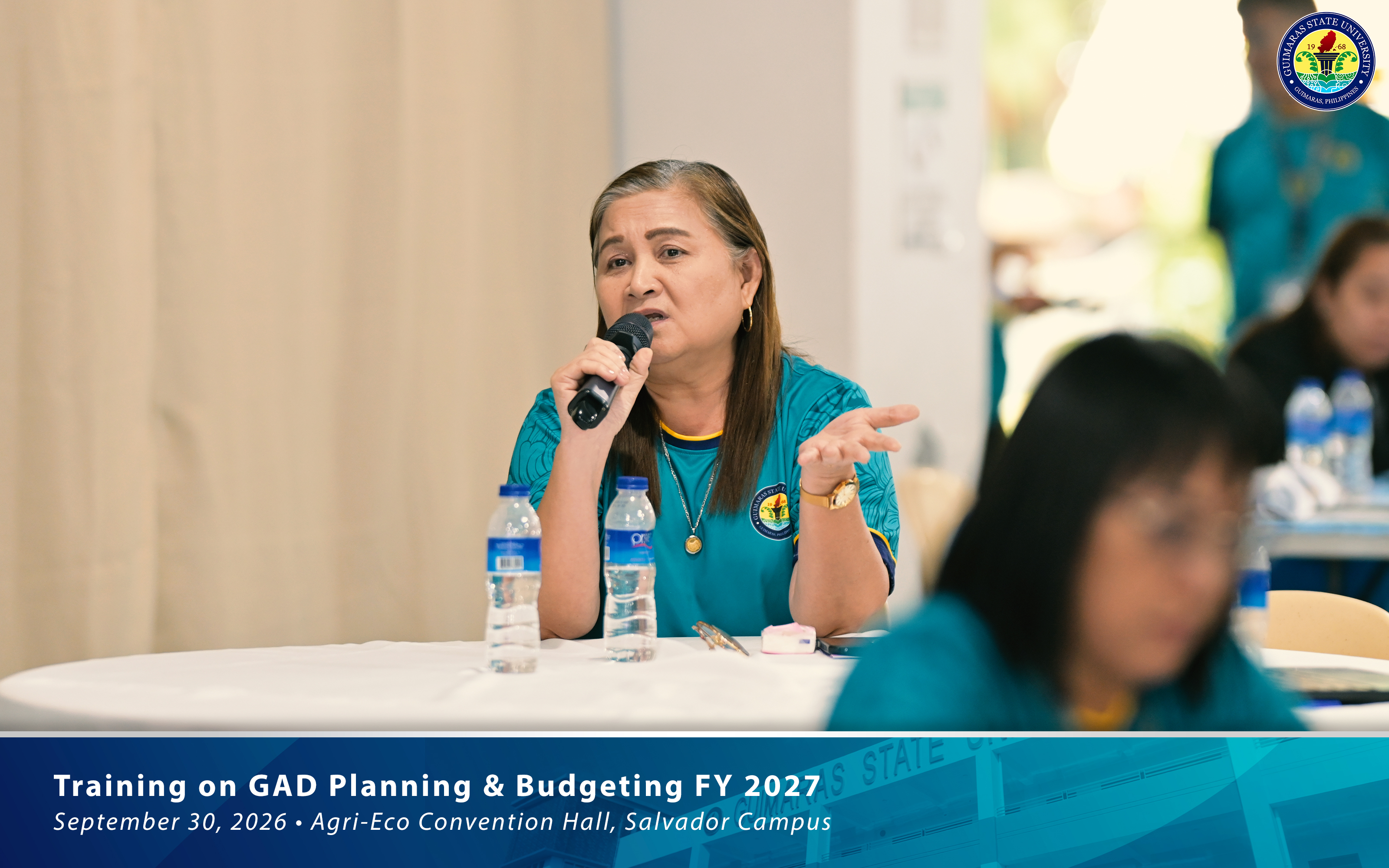
On September 30, 2026, Guimaras State University (GSU) convened key administrative officers and members of the Gender and Development Focal Point System (GFPS) for an orientation and planning session on gender analysis tools and the preparation of the University’s Gender and Development (GAD) budget.
The session sought to deepen the GFPS’s working knowledge of gender analysis instruments and their application in institutional planning and fiscal programming, particularly in aligning proposed activities and expenditures with gender-responsive governance.
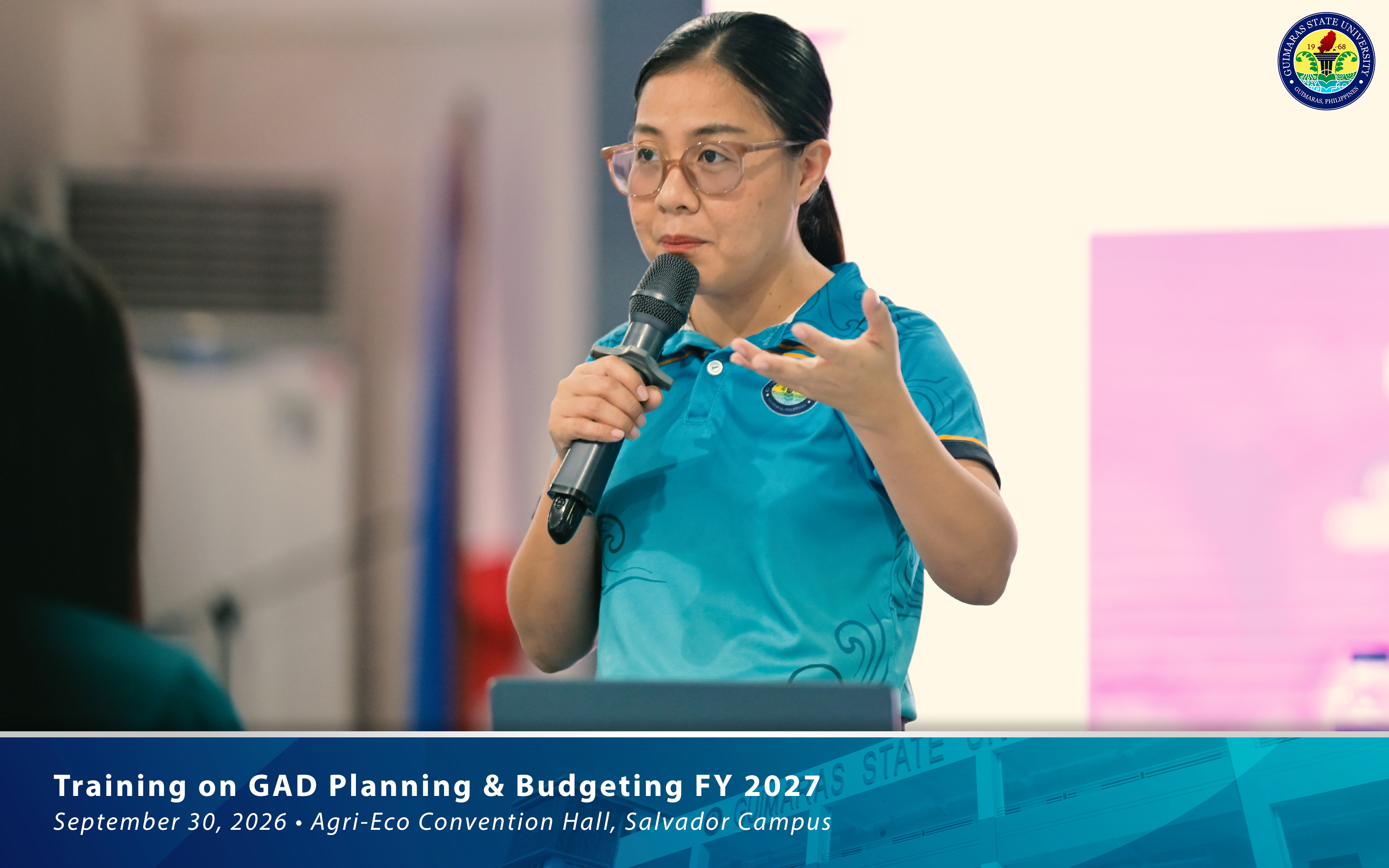
Moderated by Dr. Khristian de la Rama, the program opened with multimedia preliminaries before University President Dr. Lilian Diana B. Parreño delivered the welcome message. Dr. Parreño emphasized the need to embed gender perspectives in university governance, program planning, and budget formulation rather than treating GAD concerns as a separate administrative concern.
Instr. French Marie P. Edang of the GFPS Secretariat facilitated the technical orientation on gender analysis tools, including the Harmonized Gender and Development Guidelines (HGDG) and Project Implementation, Monitoring, and Evaluation (PIMME).
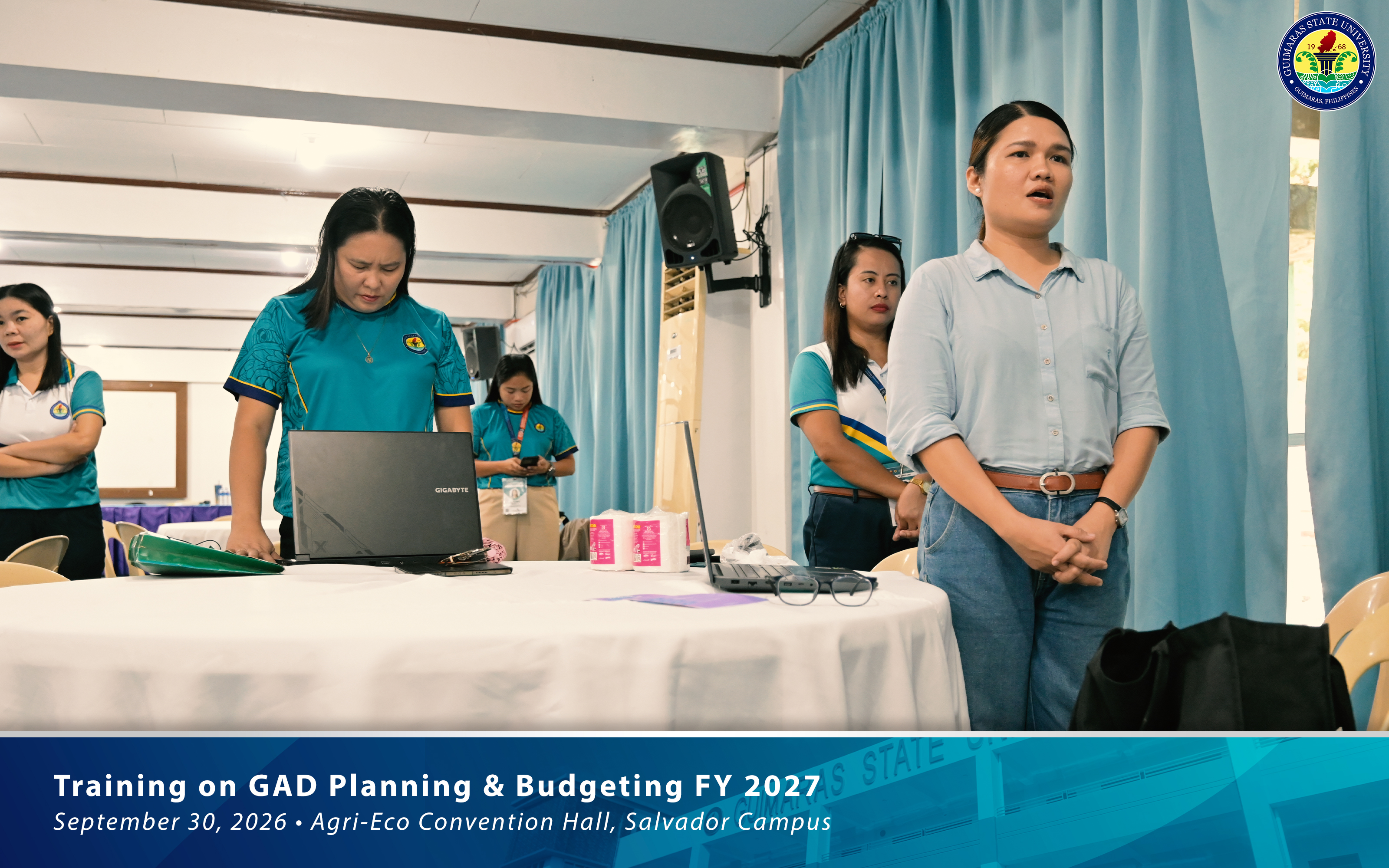
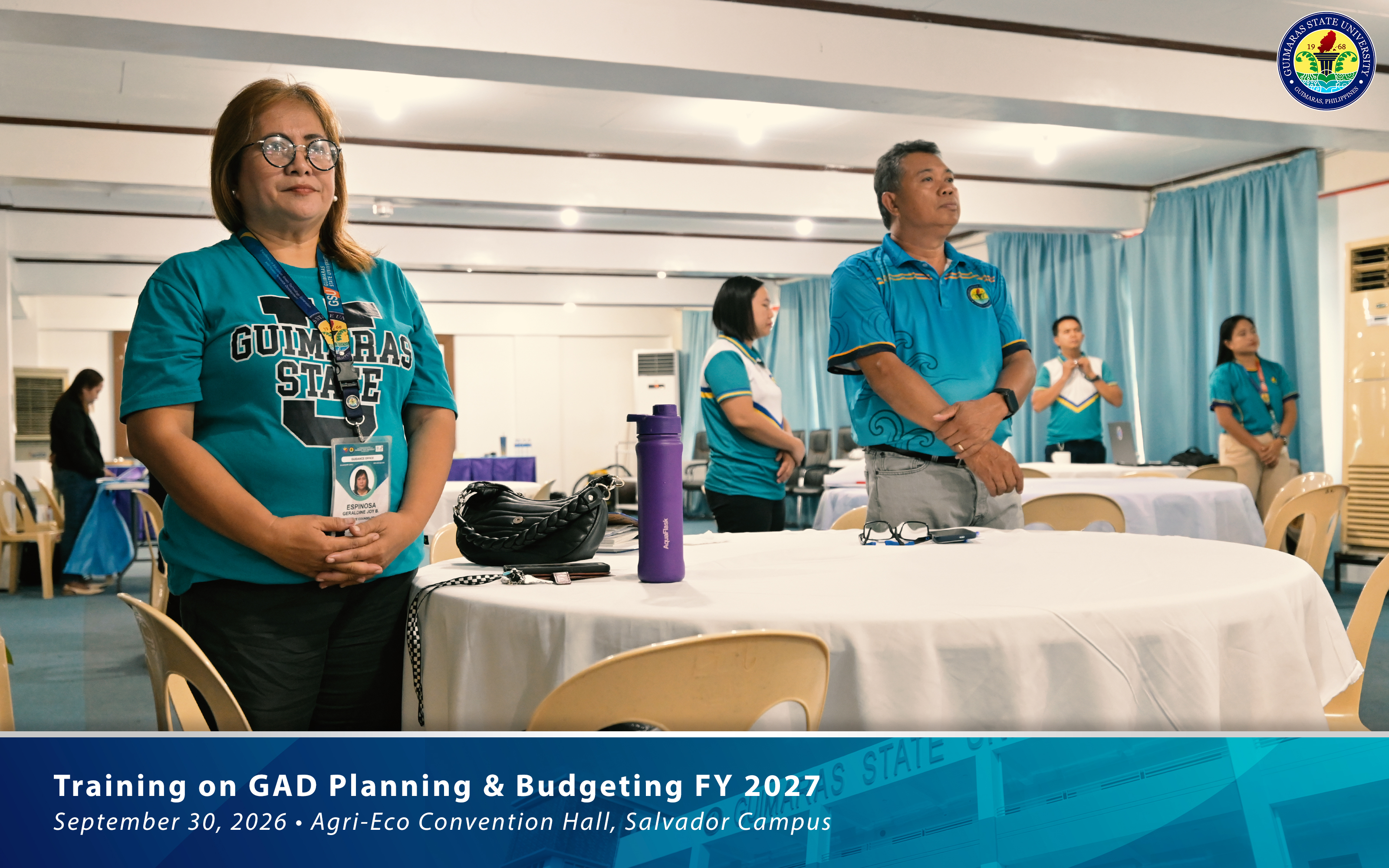
The discussion situated these instruments within the University’s planning and budgeting processes, particularly in assessing whether proposed programs, projects, and activities sufficiently account for gender-related concerns and respond to identified gender issues.
Following the technical briefing, Administrative Officer V and GFPS Secretariat member Ijieline F. Gallo presented the current implementation status of the FY 2026 Gender and Development Plan and Budget (GPB). The presentation provided the participants with a status reference on the implementation of programmed GAD activities and corresponding budgetary commitments.
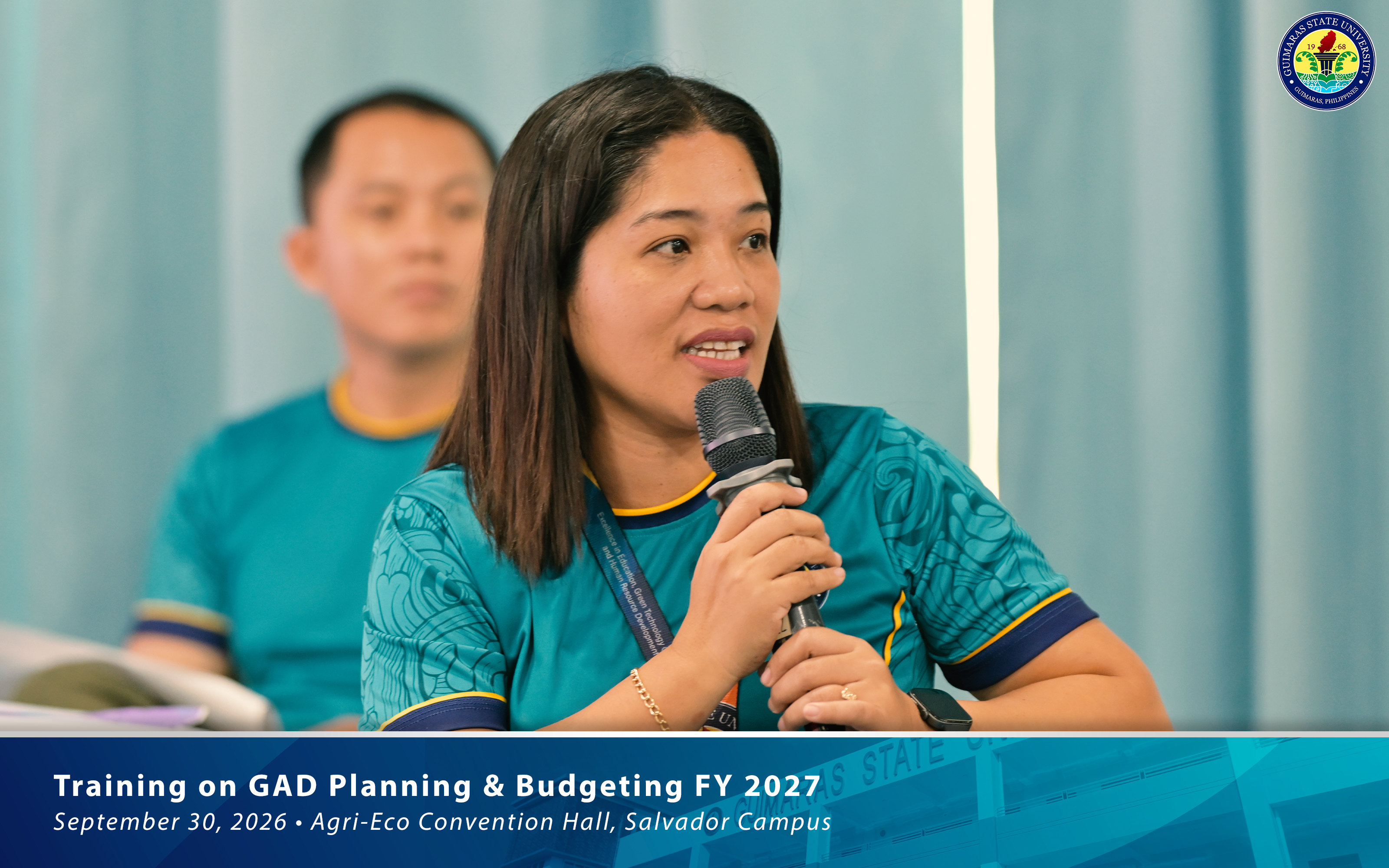
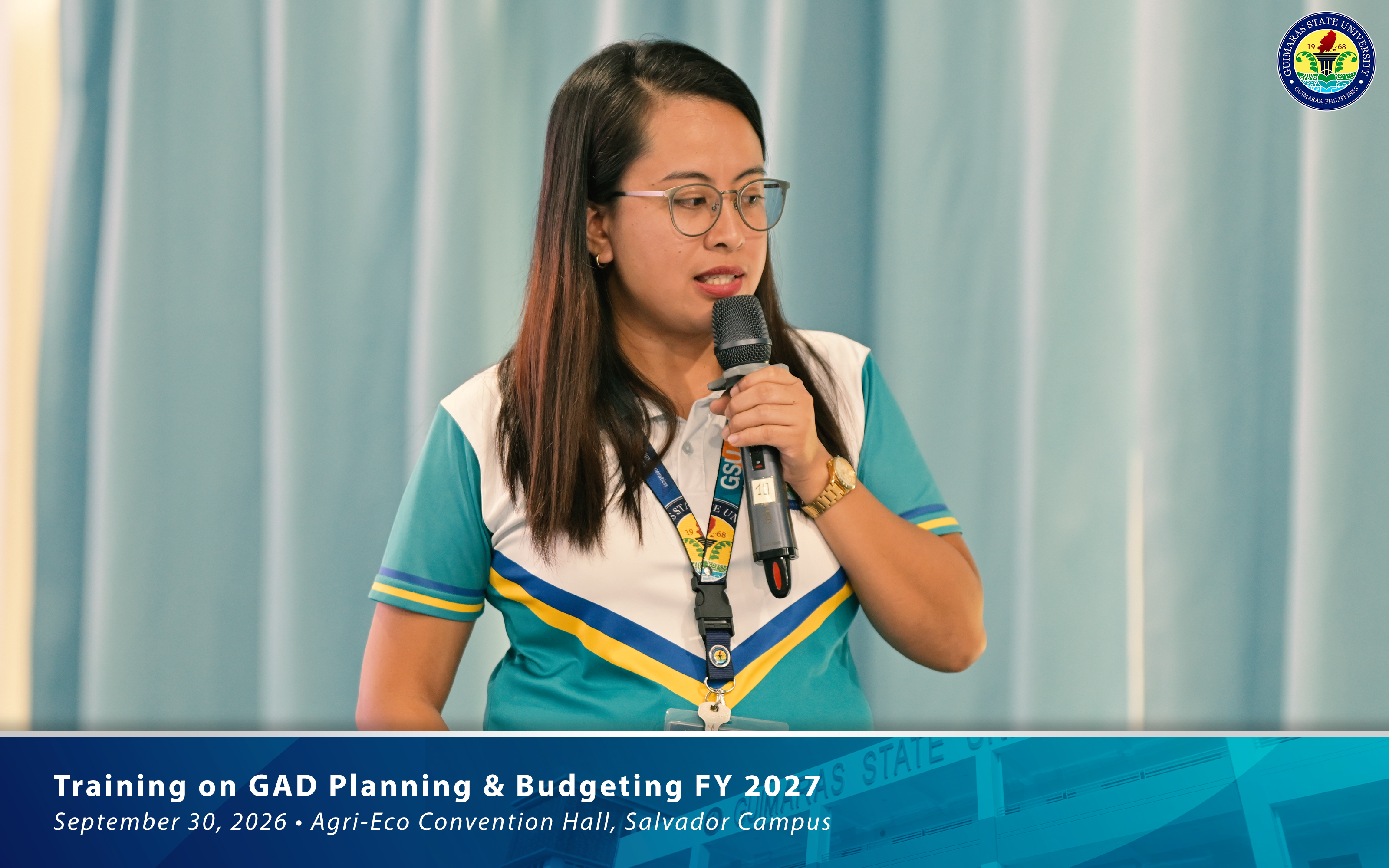
In the afternoon session, GAD Director Frennie D. Zarate led the presentation, deliberation, and finalization of the proposed FY 2027 GAD Plan and Budget.
The planning session provided the GFPS and concerned administrative officers a working forum to examine proposed GAD interventions, reconcile program priorities with available fiscal allocations, and ensure that the succeeding year’s gender-responsive programming is anchored on established planning and budgetary parameters.